

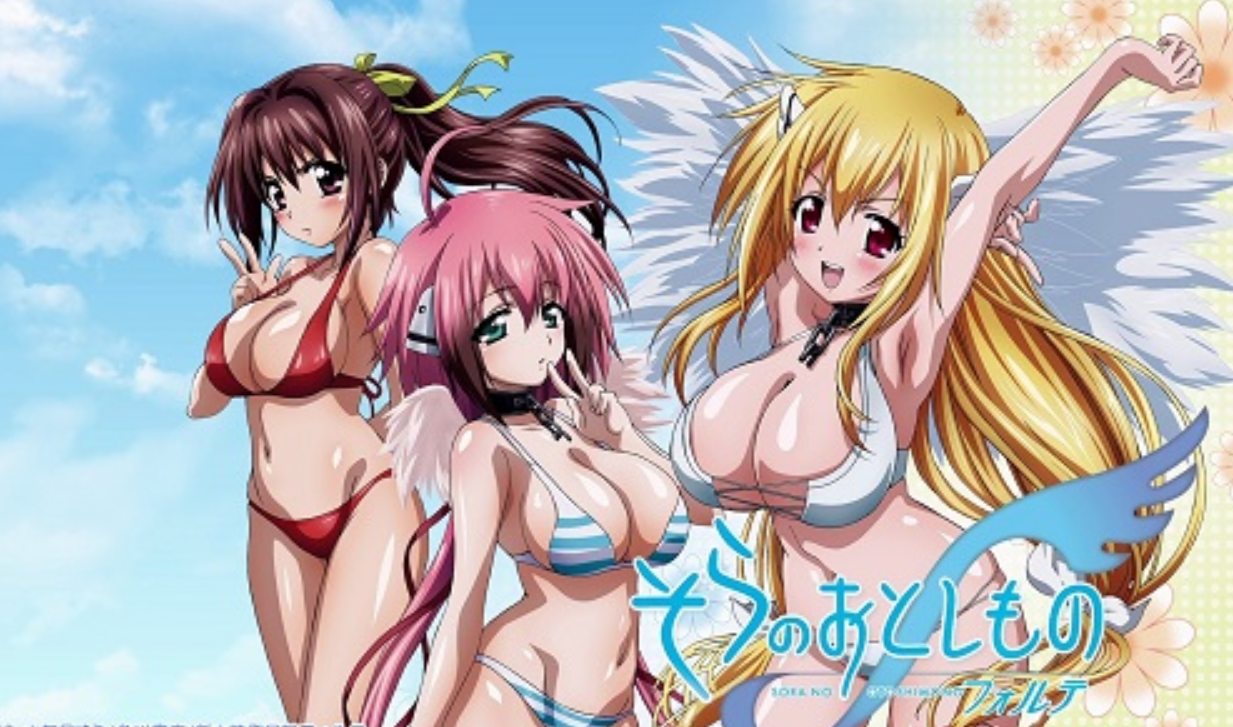
Introduction
In the world of late 2000s and early 2010s anime, finding a series that successfully blends wild comedy with genuine emotional storytelling is rare. Sora no Otoshimono (そらのおとしもの), officially localized in English as Heaven’s Lost Property, stands as one of the most iconic titles of that era. Created by Suu Minazuki and animated by Studio AIC A.S.T.A., the franchise grew from a popular manga in Shōnen Ace into a multi-season anime, OVAs, and feature films. While initially recognized for its absurd ecchi humor, Sora no Otoshimono earned a lasting legacy due to its surprisingly tragic lore, memorable sci-fi world-building, and heart-wrenching character growth.
What Is Sora no Otoshimono?
The story centers on Tomoki Sakurai, an overly eccentric high school student whose personal philosophy is simply to live a quiet, normal life (“Peace and quiet is best”). However, his peaceful existence shatters when a mysterious winged girl falls from the sky during a strange atmospheric event.
This girl, Ikaros, reveals herself as an “Angeloid” — a powerful synthetic artificial being created in a floating land above Earth known as Synapse. Upon meeting Tomoki, she enters an absolute master-servant contract with him via a “Imprinting” chain. Despite having weapons capable of apocalyptic destruction, Ikaros lacks basic human emotion and understanding. As more Angeloids descend to Earth, Tomoki finds himself shielding these weaponized synthetic beings from their cruel masters in Synapse, teaching them what it truly means to possess a human heart and personal freedom.
Who Is It For?
Sora no Otoshimono targets mature audiences (17+) who enjoy mid-2000s anime classics that balance slapstick ecchi comedy with high-stakes supernatural battle mechanics. If you like series that seamlessly shift between hilarious slice-of-life domestic scenarios and heavy sci-fi action drama (such as Chobits, Date A Live, or High School DxD), this franchise delivers a complete package.
Narrative Breakdown and Core Themes
1. The Angeloid Technology and Synapse Lore
Behind the absurd daily comedy lies a dark, tragic sci-fi premise. Synapse is a decaying, lonely realm in the sky where the creators of the Angeloids reside. The Angeloids—ranging from battle types like Ikaros (Alpha) and Nymph (Beta) to heavy-combat units like Astraea (Delta)—are treated merely as tools or toys by their masters. The contrast between Synapse’s bleak cruelty and Earth’s warm domestic living gives the series real dramatic weight.
2. Emotional Awakening and Human Connection
The core narrative arc focuses on humanity over combat. Ikaros begins her journey completely emotionless, only able to follow orders. Through Tomoki’s insistence on treating her as an equal rather than a weapon, she slowly learns affection, sadness, and self-determination. This emotional growth extends to other Angeloids who seek refuge in Tomoki’s home.
3. Slapstick Comedy & Unfiltered Ecchi
Tomoki is unapologetically perverted, leading to constant chaotic situations, chibi animation shifts, and hilarious domestic arguments with his childhood friend, Sohara. The show uses its magical cards and sci-fi gadgets to drive absurd, over-the-top comedic episodes.
Production Quality & Soundtrack
Produced by AIC A.S.T.A., Sora no Otoshimono boasts distinct visual flair:
- Visuals & Art Style: The series excels in character design, particularly in the detailed rendering of the Angeloids’ wings, armor, and combat gear. Action sequences feature smooth movement and dramatic scale.
- Creative Ending Themes: Uniquely, the first season features a completely different nostalgia-themed ending song (ED) for almost every single episode, showcasing the production team’s creative dedication.
- Voice Acting: The cast gives standout performances, shifting effortlessly between ridiculous scream-filled slapstick and quiet, tragic emotional delivery.
How Sora no Otoshimono Compares to Other Classics
| Feature | Sora no Otoshimono | High School DxD | Chobits |
| Primary Setting | Small Town / Sci-Fi Synapse | Supernatural High School | Modern Urban Slice-of-Life |
| Core Tone | Slapstick Comedy + Tragic Sci-Fi | High-Action Supernatural Battle | Cozy Sci-Fi Romance |
| Female Lead | Synthetic Angeloid (Ikaros) | Demon Princess (Rias Gremory) | Android (Chii) |
| Protagonist Style | Perverted yet protective underdog | Action-oriented harem hero | Shy, gentle young man |
What Works Well
- Masterful Genre Transition: Effortlessly switches from absurd, belly-laugh comedy in one episode to genuinely crying-worthy emotional drama in the next.
- Memorable Character Cast: Every Angeloid has a distinct personality, combat style, and emotional arc.
- Strong World-Building: The mysterious background of Synapse keeps the overarching plot intriguing throughout.
Areas for Improvement
- Pacing Distractions: The extreme frequency of ecchi tropes and fan-service in filler episodes can occasionally disrupt the serious story arcs.
- Incomplete Mainline Anime Adaptation: The TV anime series (Season 1 and Forte) does not fully adapt the entire manga. Viewers must watch the movies (The Angeloid of Clockwork and Eternally My Master) or read Suu Minazuki’s 20-volume manga for the full story resolution.
Watch Order Recommendation
To experience the story properly, follow this release structure:
- Sora no Otoshimono (Season 1 — 13 Episodes + OVA)
- Sora no Otoshimono: Forte (Season 2 — 12 Episodes)
- Heaven’s Lost Property the Movie: The Angeloid of Clockwork (Movie 1)
- Heaven’s Lost Property Final: Eternally My Master (Movie 2 / Final Arc)
Final Verdict
Sora no Otoshimono remains one of the defining titles of the harem/ecchi genre. Beyond the comedic antics and fan-service lies a deeply moving tale about freedom, humanity, and finding a place to belong. It is an unforgettable journey well worth watching.
This video review provides a detailed breakdown of the Sora no Otoshimono anime, discussing its story arcs, character dynamics, and production quality.
